Put coaching first to turn around an underperforming sales team.

Most underperforming sales teams are not failing because of effort.
They are busy. They attend meetings, manage pipelines, speak with customers, and pursue opportunities. Activity is rarely the issue.
The real problem is how performance is developed.
In most organisations, sales managers are expected to improve performance through coaching. They review deals, inspect pipelines, and provide feedback. The assumption is that their experience will transfer to the team.
In practice, this rarely works.
Management is a full-time responsibility. Targets must be met, forecasts must be accurate, and problems must be addressed immediately. Coaching, by contrast, requires time, preparation, and focus on developing how salespeople think, prioritise, and act.
As a result, coaching is squeezed, inconsistent, or absent altogether.
This is one of the most common and least recognised reasons why sales teams underperform.
The Real Cause of Sales Underperformance
When sales results fall short, organisations often look for simple explanations:
- The team lacks motivation
- Individuals need training
- The market is difficult
- The product is not competitive
These factors can play a role, but they are rarely the primary cause.
The more consistent issue is that sales responsibility has been dumped on the salespeople without due consideration of the support needed. This can work if you have a market-leading solution and have hired industry-leading salespeople. If this is not the case for you, and it can't be for everyone, your salespeople will need the support of someone who knows how to win without having the best product and lowest price.
Assuming they will learn on the job is a high-risk strategy. As discussed already, even the best sales managers struggle to transfer their knowledge and skills.
Skills are not refined. Decision-making is not improved. Problems are not identified early enough.
And the reason is structural:
Sales managers are expected to coach, but their role makes effective coaching difficult to deliver consistently.
How Sales Coaching Differs from Managing
Although management and coaching are often treated as the same activity, they serve very different purposes.
Management focuses on:
- Targets, forecasts, and deadlines
- Pipeline reviews and reporting
- Short-term performance and results
- Enforcing process and accountability
Coaching focuses on:
- How salespeople think and make decisions
- How opportunities are qualified and progressed
- Identifying risks early and improving judgement
- Developing skills that improve future performance
Why this Matters
When a manager reviews a deal, the conversation often becomes a defence of current actions:
- Why this opportunity will close
- Why the forecast is accurate
- Why the approach is correct
A coach takes a different approach:
- What assumptions are being made?
- What is not yet understood?
- What could go wrong?
- What should be done differently?
This shift—from inspection to development—is what improves performance over time.
Even when managers have the capability to coach, the structure of their role works against it. They are responsible for the results now. Coaching develops capabilities that produce results over time.
Managers must prioritise urgent issues. Coaching requires preparation, reflection, and repetition.
Managers have responsibilities for multiple people, up and down the organisation. Coaching requires focused, individual attention.
As a result, coaching becomes irregular, reactive, and secondary to immediate demands.
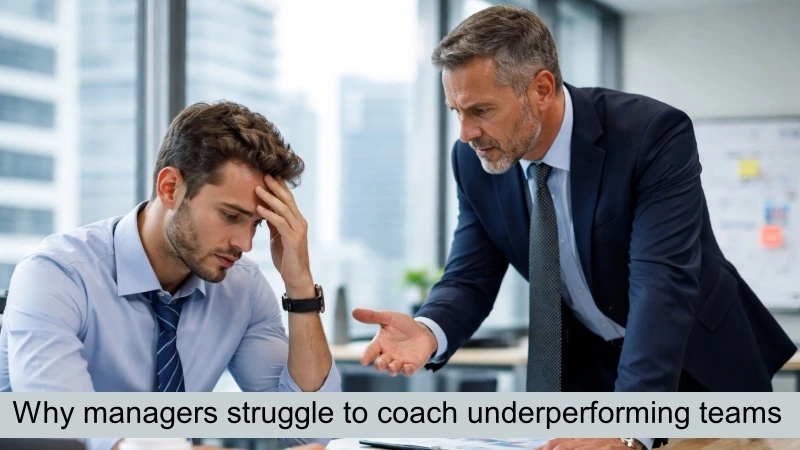
Why sales managers struggle to coach.
Goals and objectives: Managers set targets and incentives. The annual target is broken down into quarters, months, or weeks. Coaching helps salespeople recognise and commit to the actions that lead to the achievement of objectives and goals.
Accountability: Management focuses on target achievement and deadlines. Managers can lack the time and coaching skills necessary to ensure a salesperson can get the required results. Coaching facilitates the necessary thinking and planning.
Decision-making: Managers review current opportunities and pipeline status. This encourages salespeople to defend their decisions. A coach concentrates on understanding. A coach who is not the salesperson's manager is better able to understand and influence the thinking and decision-making used to win sales.
Feedback: Management conversations tend to focus on numbers, targets, and activity levels. Salespeople are usually more comfortable discussing the customer issues they face with someone who is not their manager. Thus, an experienced coach is better able to help salespeople understand what to change and why.
Performance improvement: Regular coaching leads to improved sales performance, higher close rates, and increased revenue. Our research indicates that salespeople with a coach sell 13% more than those without coaching support. When the manager is the coach, time for coaching is often squeezed. Coaching takes a back seat and is sporadic.
Confidence is assumed, not nurtured: Managers expect salespeople to perform in front of customers. Coaching prepares them for those interactions through forethought, planning, and preparation.
Overcoming challenges: Team members are often reluctant to admit problems, especially when there is a management expectation of competence. Coaches surface the individual challenges and obstacles faced by salespeople and help them deal with them by teaching problem-solving methods.
Problems are addressed too late: Management tends to respond when deals are already at risk. Coaching identifies issues earlier, when there is still time to influence the outcome.
Qualification: Managers expect salespeople to adhere to the declared qualification criteria and enforce this through deal reviews. Coaching helps salespeople understand the subtext, derivative questions, and circumstances that determine whether prospects are likely to become customers.
Adapting to change: Managers point out new market opportunities and changing customer needs. Coaching helps teams adapt by developing and testing new strategies and tactics.
Training: Managers use training to influence behaviour and introduce new ideas, but without ongoing coaching, practices quickly lapse as habits are reasserted. Coaching carries learning forward by aligning it with real situations and turning knowledge into results.
Career development: Managers have limited options for advancing team members and so tend not to raise the subject. A coach uses career advancement as a motivator for learning and development.
Short-term: Managers must focus on short-term results because revenue shortfalls precede resource constraints. Coaching patiently develops thinking, planning, and decision-making skills that improve performance over time.
Can sales managers turn around underperforming sales teams?
Some sales managers do manage to overcome the difficulties of coaching while managing, at least for some members of their team, yet most do not. Test this for yourself. Add up the number of hours you spend coaching per team member per month. It might be difficult to disentangle. Coaching is mostly about listening, reflecting, and nudging. Some pipeline, forecast, and deal reviews might be counted as coaching, at least partially, but most are not. They are mainly about verifying accountability and assessing risk rather than developing a salesperson's abilities.
In practice, managers must manage first. Coaching requires time, preparation, and focus that most managers simply do not have. That is why sales teams without a dedicated coach often work hard, remain busy, and still fall short of their potential.
What High-Performing Sales Teams Do Differently
High-performing sales teams do not leave coaching to chance. They recognise that management and coaching serve different purposes and require different conditions to be effective.
They create time and structure for coaching to take place. They ensure that salespeople are supported in how they think, plan, and act on real opportunities, not just measured by results.
In many cases, this involves separating coaching from management altogether, so that development is consistent, focused, and not compromised by day-to-day pressures.
Without this, sales teams often remain busy, active, and engaged, yet continue to fall short of their potential.
Article by Clive Miller
Clive Miller is a UK-based sales consultant, trainer, and coach with over 30 years’ experience helping B2B organisations improve sales performance and decision-making effectiveness.
FAQ: Underperforming Sales Teams
Why do sales teams underperform even when they are busy?
Because activity does not guarantee effectiveness. Many sales teams appear productive because they are attending meetings, updating the CRM, preparing proposals, and speaking with prospects. However, if they are not qualifying properly, navigating decision-making well, or advancing opportunities effectively, they can remain busy without improving results. Coaching helps salespeople refine how they think, plan, and act so that their effort translates into better outcomes.
Can sales managers effectively coach their teams?
Some can, but in practice, it is difficult. Sales managers are responsible for targets, forecasts, pipeline reviews, problem-solving, and day-to-day oversight. These responsibilities often take priority over coaching. Effective coaching needs preparation, focus, and regular one-to-one attention, which many managers simply do not have time to provide consistently.
What is the difference between sales coaching and management?
Management focuses on targets, accountability, reporting, and short-term results. Coaching focuses on improving judgement, decision-making, qualification, opportunity strategy, and selling skills over time. Management monitors performance. Coaching develops the thinking and behaviours that improve performance.
How often should sales coaching take place?
Sales coaching should take place regularly and consistently. Occasional conversations after a problem has already emerged are less effective than ongoing coaching linked to live opportunities, real customer situations, and practical skill development. Consistency matters more than intensity.
When should a company use an external sales coach?
An external sales coach can be valuable when managers do not have the time, structure, or objectivity to coach well. External coaching is also useful when a business wants to improve win rates, strengthen qualification, increase consistency, or develop a more thoughtful sales approach without adding more management pressure.
Related Resources
- Sales Management and Leadership Articles
- How to Improve Sales Performance
- Turn Around Underperformance with Coaching
- B2B Sales Training Courses
If your sales team is working hard but not achieving the results you expect, the issue is often not effort, but how performance is being developed. Start with a structured review using our free Sales Performance Diagnostic to identify where coaching, process, or decision-making needs to improve. If you prefer to talk things through, arrange a call with Clive Miller.
Do you have an underperforming sales team? We can help you turn things around. Telephone +44 (0)1392 851500. Alternatively, email jimm@salessense.co.uk or use the contact form here.