Understanding the real reason B2B deals stop moving.
In many sales pipelines, there are opportunities that seem to go quiet. The salesperson has had productive conversations. The prospect appeared interested. A proposal has been submitted. Then progress slows, responses take longer, and eventually the deal appears to stall. Understanding why sales opportunities stall enables managers and salespeople to unclog their pipeline.
The natural reaction is to assume the customer has lost interest. In complex B2B sales, that explanation is usually wrong. Deals rarely stall because the customer has suddenly changed their mind. They stall because the buying organisation has not yet reached internal agreement.
Understanding this difference is one of the most important insights in professional selling.
The Hidden Complexity of B2B Decisions
In simple purchases, a single person can decide. Complex B2B purchases are different. They typically involve several stakeholders who must agree that change is necessary and that a particular solution is acceptable.
Depending on the situation, these stakeholders may include:
- Operational users
- Technical specialists
- Finance or procurement
- Senior management
- Risk or compliance functions
- IT or integration teams
Each of these people views the decision from a different perspective. Some may see benefits. Others see risks. Some may not see a need for change at all. Before a buying organisation can commit to a decision, these different viewpoints must align. That alignment rarely happens quickly.
The Internal Consensus Problem
When an opportunity stalls, the real issue is often that the customer organisation is working through its own internal questions. Typical issues include:
- Different stakeholders have different priorities
- Some decision makers have not yet been consulted
- The cost or risk of change is still unclear
- Internal politics or competing projects are slowing progress
From the salesperson’s perspective, the prospect stops responding to calls and messages. It is like a black hole. Nothing you send in comes back.
From the customer’s perspective, there is an internal process of discussion, debate, and risk evaluation. The deal is not dead. The organisation simply has not yet reached consensus.
The Salesperson’s Real Role
Less experienced salespeople focus primarily on presenting their solution. More effective salespeople recognise that their real role is to help the customer organisation make a decision. This means understanding how decisions are actually made inside the prospect’s organisation.
Key questions include:
- Who will be affected by this decision?
- Who needs to approve it?
- Who might oppose it?
- What internal risks must be addressed?
- What business problem must be agreed upon before a solution can be adopted?
By identifying these factors early, the salesperson avoids the most common cause of stalled deals: unseen stakeholders and unresolved internal concerns.
Mapping the Customer’s Decision Process
Professional B2B sellers invest time early in understanding the customer’s decision process.
This involves identifying:
The stakeholders - who is involved in evaluating the decision?
The decision criteria - what must be true before the organisation commits?
The approval process - what internal steps must occur before the purchase can proceed?
The risks - what concerns might delay or block agreement?
When these elements are visible, the salesperson can help guide the process rather than waiting passively for a decision.
Helping the Customer Build Agreement
Once the internal decision process is understood, effective salespeople actively support the customer in reaching an agreement. This might involve providing information for internal presentations, clarifying financial justification, addressing technical or operational concerns, helping stakeholders understand the consequences of inaction and ensuring all relevant people are included in the conversation.
In other words, the salesperson becomes a facilitator of internal consensus.
This is one of the most valuable roles a salesperson can play in complex B2B sales.
Why “Stalled” Opportunities Can Recover
When the real issue is internal uncertainty rather than lost interest, stalled opportunities frequently restart once the organisation reaches alignment. This is why deals that appear dormant sometimes suddenly move forward again. The internal process has simply taken time.
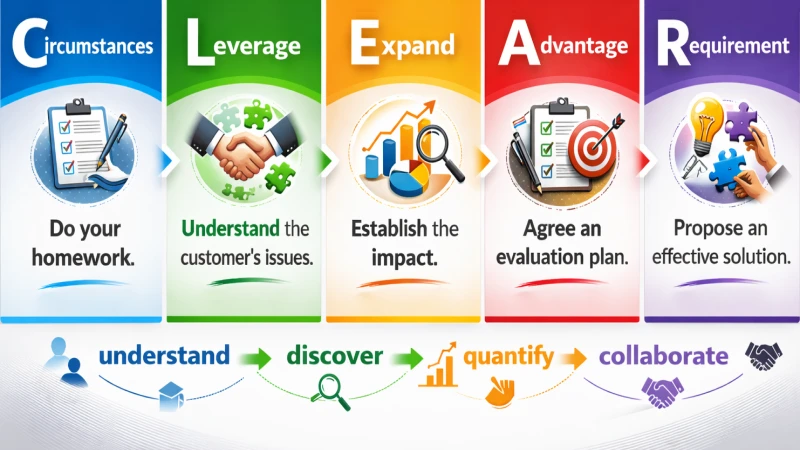
Salespeople who understand this dynamic remain engaged with the customer, continue to provide value, and help the organisation resolve its questions. A reliable means of staying engaged is to establish an evaluation plan that includes actions for all of the likely hurdles.
Those who assume the deal is lost often disengage too early.
Why Sales Opportunities Stall - The Key Insight
When a sales opportunity slows down, the most important question is not, “Has the customer lost interest?” Instead, it should be “What uncertainty still exists inside the customer organisation?”
Identifying and resolving that uncertainty is often the difference between a stalled pipeline and a successful sale.
In Summary
Sales opportunities rarely stall because customers stop caring about the problem. They stall because organisations must build internal agreement before committing to change. The most effective B2B salespeople recognise this and focus on understanding the customer’s decision process, identifying all stakeholders, addressing internal risks and concerns, and helping the organisation reach consensus.
When salespeople learn to guide this process, opportunities move forward more reliably and deals that once appeared to stall begin to close.
Article by Clive Miller
Clive Miller is a UK-based sales consultant, trainer, and coach with over 30 years’ experience helping B2B organisations improve sales performance and decision-making effectiveness.
Related Resources
- How to Avoid a Black Hole and Close a Sale
- The Perfect Sales Discovery Call
- Win More High-Value Complex Sales
- How to Win with Sales Strategy
If you need to understand why sales opportunities stall or want to free up a clogged pipeline, we can help. Telephone +44 (0)1392 851500. We will be pleased to discuss your needs or talk through some options. Send an email to custserv@salessense.co.uk for a prompt reply or use the contact form here.