Should you know why and how your typical customers buy?
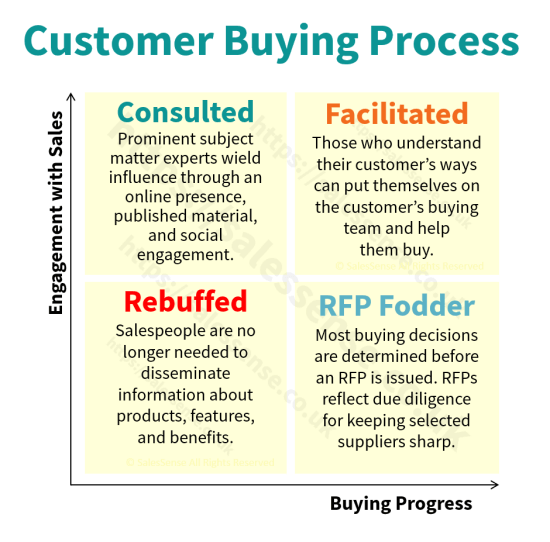
In this section of the course, learn about the B2B customer buying process.
There are several different types of buying decisions that businesses must make.
Customer Buying Process
All but the smallest businesses develop processes and procedures to ensure that money is spent wisely.
For example:
Where products are bought repeatedly and particularly where the same thing can be sourced from multiple suppliers, buying decisions are often delegated to a professional buyer or purchasing manager.
Yet if the people who must use the product have strong reasons for favouring a particular supplier, they can influence and sometimes overrule the professional buyer's choice.
The buying decisions for machinery, technology, software, and non-recurring services may be orchestrated by a professional buyer however, the decisions are normally made elsewhere.
Spending is normally classified as operational or capital.
Operational spending normally includes things that must be bought repeatedly such as consumables and materials.
Capital spending refers to things that are intended to be used for a long period of time such as machinery, infrastructure, and computers.
Each classification has different accounting and tax implications.
Businesses have some flexibility in the choice of spending classification and this has a bearing on the availability of the money.
Complex purchases can be split between capital expenses and operational expenses.
For example:
Software that is a long-term investment is normally a capital expenditure however, SAS - software as a service - can be categorised as an operational expense.
Support, maintenance, and training are normally operational expenses however, all of these can be included in a multi-year licence.
Why does a salesperson need to know about the intricacies of business accounting?
Because it affects the availability of funds and the buying process employed.
So in this section of the course, we will offer some examples of the different purchasing processes that may be used and discuss the all-important access to funds.
If you have been selling for a while, you will have heard the usual rebuffs:
"We don't have the money."
"It's not in the budget."
With an understanding of how businesses and organisations fund their buying intentions and account for their spending, you will be better able to recognise opportunities and influence buying choices.
Free B2B Sales Training Course Index
Tips for Teaching Yourself
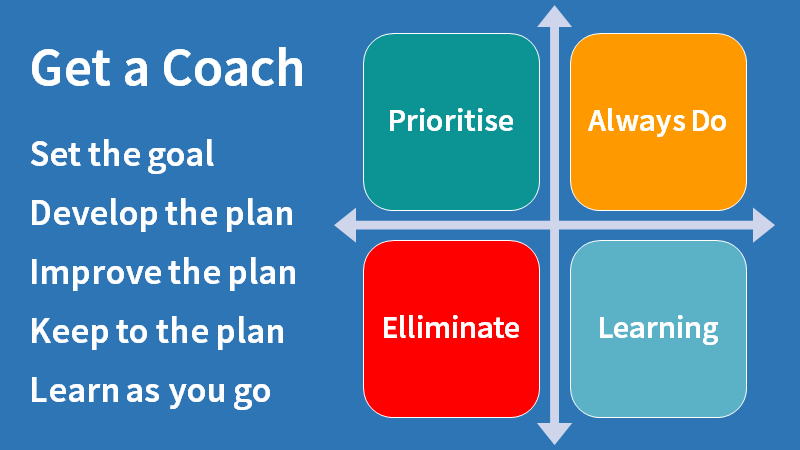
Set clear goals: Start by defining specific and achievable learning goals. Clearly articulate what you want to learn or accomplish through self-teaching. This helps you stay focused and motivated throughout the learning process.
Design a structured plan: Create a structured learning plan that outlines the topics or skills you need to cover, along with a timeline for each. Break down the material into manageable chunks and set milestones to track your progress.
Gather learning resources: Identify and gather high-quality learning resources that align with your goals. These can include books, online courses, tutorials, videos, podcasts, or reputable websites. Utilize a mix of resources to get different perspectives and approaches to the subject matter.
Establish a learning routine: Consistency is key to self-teaching. Set aside dedicated time in your schedule for learning, and stick to it. Whether it's a few minutes each day or longer sessions a few times a week, establish a routine that works for you.
Practice active learning: Engage in active learning techniques to enhance comprehension and retention. Take notes, summarize key concepts in your own words, and create flashcards or mind maps. Actively apply what you learn through practical exercises, projects, or real-life scenarios.
Seek out feedback and evaluation: Look for opportunities to receive feedback on your progress and performance. This can be from peers, mentors, or online communities related to the subject you're learning. Feedback helps you identify areas for improvement and refine your understanding.
Stay motivated and disciplined: Self-teaching requires self-discipline and motivation. Find ways to stay inspired, such as connecting with others who share your interests, joining online forums or study groups, or tracking your progress visually. Celebrate milestones and achievements to keep your motivation levels high.
Embrace a growth mindset: Adopt a growth mindset that embraces challenges, setbacks, and mistakes as opportunities for learning and growth. Embrace the process of self-teaching as a journey of continuous improvement and embrace the learning curve.
Reflect and iterate: Regularly reflect on your learning experience. Assess what strategies or resources have been most effective for you and make adjustments as needed. Be open to trying different approaches or seeking additional resources if you encounter difficulties.
Stay curious and never stop learning: Cultivate a lifelong love of learning. Embrace curiosity and seek out new topics or skills to explore. The process of teaching yourself can extend beyond a specific goal and become a lifelong pursuit of personal and professional development.
Have us help you achieve learning momentum. Join our new scheduled one-hour-a-week professional sales career training course.
If you have the discipline of an autodidact, use our self-led B2B sales training course. See the index here. This page presents the overview of section one, about the customer buying process. It describes what you can gain from this section of the course. If you need more, have any of our B2B sales training courses or any element or any combination of elements delivered for groups or individuals through online sales training sessions or one-to-one coaching. Call +44 (0)1392 851500 or email jimm@salessense.co.uk for details.