Should your sales and marketing operations be generating more business?
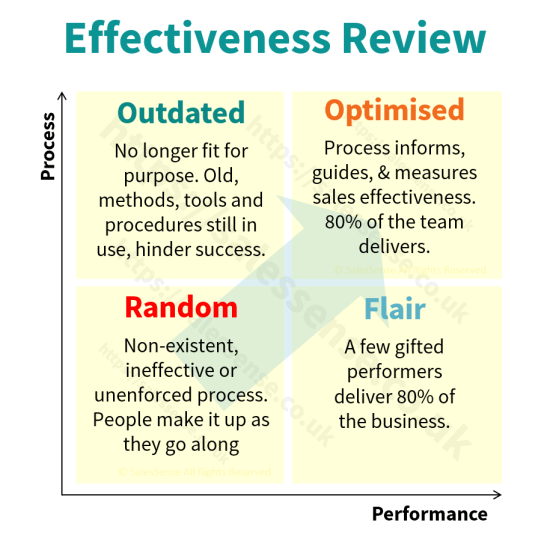
Get definitive answers from a structured sales and marketing effectiveness review.
Have you heard the Acres of Diamonds story? In short, it is about a farmer who sells his land to go diamond prospecting. Then the new owner discovered that the land was littered with diamonds.
Are you missing your acres of diamonds?
A sales and marketing effectiveness review can quickly identify easy-to-implement, low-cost or no-cost ways to increase performance.
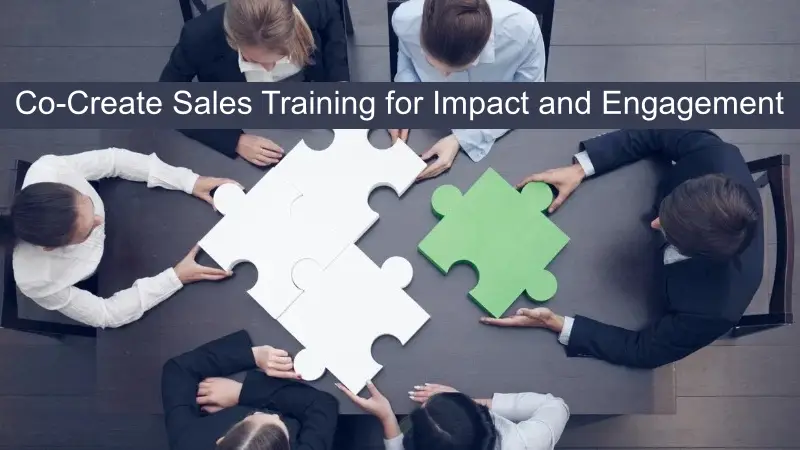
It is a unique process that draws out the insights and knowledge of your people and facilitates the development of effective, invented here, solutions.
Arrange a free initial discussion:
When Is a Sales and Marketing Effectiveness Review Useful?
A review is most valuable when you recognise that your operation ought to be performing better than it is, yet the cause is not obvious. Typical symptoms include:
- Lead generation activity is producing too few qualified opportunities.
- Marketing and sales teams appear busy, but results remain inconsistent.
- Forecasts are unreliable or depend too heavily on judgement rather than evidence.
- Sales opportunities stall, drift, or disappear without clear reasons.
- Win rates fluctuate between people, territories, or market sectors.
- Sales cycles are lengthening, and decision processes are becoming harder to control.
- CRM data exists, but does not drive better management decisions.
- Good salespeople are working hard, but pipeline progression remains weak.
- Customer acquisition costs are rising without a matching increase in value.
- Management meetings focus on activity rather than the causes of performance variation.
These issues often appear to be sales problems, but the real causes can be elsewhere in the commercial system.
How the Facilitated Enquiry Works
The facilitated enquiry is the core of the SalesSense approach. It provides a structured way for participants to compare what is actually happening in the business with commonly held best practices.
This is not about imposing an external judgement. It is about helping participants recognise where current practice differs from what is known to work, and where those differences may be affecting results.
1. Establishing the Areas of Focus
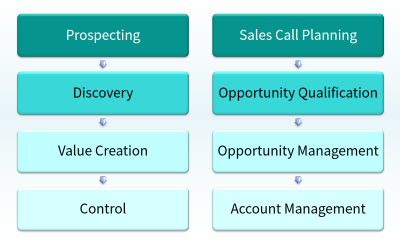
Through initial discussions, we learn about perceived performance gaps, identify the areas of sales and marketing operations to be included, and explore any related governance.
2. Comparing Current Practices with Best Practices
Participants review key aspects of sales and marketing performance using a structured assessment. This compares actual practice with established best practice across areas such as marketing, lead generation, sales, pipeline management, fulfilment, and management.
The comparison highlights gaps, inconsistencies, differing perceptions, and potential constraints.
2. Seeking Consensus on Current Practices
The initial assessment usually exposes many differences of opinion on what should be happening and what is actually being done to achieve results in the areas examined. An essential step in the Facilitated Enquiry process is to get everyone on the same page regarding current practices.
3. Select and Prioritise Improvement Opportunities
We facilitate a discussion of priorities, again aiming for consensus on what warrants attention, which opportunities should be acted upon, and in which order.
4. Form Project Teams
Once the priorities are agreed, we seek project leaders for each adopted initiative. The project leaders are then tasked with planning their improvement project.
5. Project Plans
Participants convene for project plan presentations. Project leaders present their project plans, which include the project's goal and objectives, together with a schedule of who will do what and by when.
Through a facilitated process, participants will be invited to ask questions and make plan improvement suggestions. Project leaders will be invited to acknowledge contributions and declare any adjustments adopted.
6. Project Reviews
Depending on project timelines, project leaders will be expected to hold regular project progress reviews until their project is deemed completed.
7. Support Implementation
Where appropriate, SalesSense can support these teams with structure, coaching, content, or practical sales enablement to help ensure that improvements are delivered.
Because the people involved in the work identify the issues, set the priorities, and shape the solutions, the planned changes are owned by those who need to implement them. This dramatically increases adoption and persistence.
Typical Outcomes
Depending on the findings, a sales and marketing effectiveness review can help you:
- Improve lead-to-opportunity conversion.
- Reduce revenue leakage between marketing, sales, and fulfilment.
- Shorten sales cycles by removing avoidable friction.
- Increase forecast reliability.
- Improve sales management visibility and accountability.
- Identify training, coaching, or recruitment priorities.
- Strengthen sales and marketing alignment.
- Improve pipeline quality, progression, and predictability.
- Find practical, low-cost changes that can increase profit.
Fivefold Return on Investment Guarantee
Regular independent reviews almost always reveal overlooked opportunities to improve performance. An external perspective helps bypass confirmation bias and exposes the small operational changes that internal teams often stop seeing.
SalesSense guarantees that the implementation of recommendations generated by a sales and marketing effectiveness review will increase profits by at least five times the cost of our service.
How This Review Fits with Other SalesSense Assessments
Where most of our assessments are unmanaged, relying on the user's motivation and discipline to learn from the results, our facilitated enquiry is exactly that, a facilitated process. Facilitation is its strength. The involvement of an experienced facilitator who understands the process leads to considerably improved outcomes.
- For an overview, visit Sales and Marketing Assessments.
- For an individual capability model, see the Sales Competence Model.
- To test or substantiate sales skills, see the Sales Qualifications.
- For sales management capability, see Sales Management Competencies.
- Assess sales and marketing operations with our Business Assessment Tools
- To have us design your assessment, see Bespoke Assessments
- For testing any plan, see Should You Hire a Professional
Arrange an Initial Sales and Marketing Effectiveness Discussion
If you suspect your sales and marketing operation should be producing better results, an initial discussion will help determine whether a structured review is likely to be worthwhile.
Alternatively, telephone +44 (0)1392 851500 or email custserv@salessense.co.uk.
Sales and Marketing Effectiveness Review FAQs
What is a sales and marketing effectiveness review?
A sales and marketing effectiveness review is a structured way to examine how well current commercial practices support business growth. The SalesSense approach compares what is actually happening in selected areas of the business with commonly held best practices, then helps participants identify and prioritise improvements.
How is the SalesSense review different from a conventional consultancy audit?
A conventional audit often results in an external consultant presenting findings and recommendations. The SalesSense review uses facilitated enquiry to help the client’s own people recognise performance gaps, agree priorities, define improvement aims, and take ownership of change.
What is facilitated enquiry?
Facilitated enquiry is a structured process in which participants compare current practices with best practices, discuss differing perceptions, reach consensus on what needs attention, and decide which improvement opportunities should be pursued.
Why compare current practice with best practice?
Comparing current practice with best practice helps reveal gaps, inconsistencies, assumptions, and constraints that may be affecting sales and marketing performance. It gives participants a shared reference point for deciding what should change.
Who should take part in the review?
Participants usually include people who influence or experience sales and marketing performance, such as business leaders, sales managers, marketers, salespeople, customer-facing staff, and people involved in fulfilment or operational handovers.
What happens after improvement priorities are agreed?
Once priorities are agreed, project leaders are appointed for each adopted initiative. They prepare improvement plans, define goals and objectives, agree who will do what and by when, and review progress until the project is completed.
Why does participant ownership matter?
People are more likely to support and sustain changes they helped to identify and design. Because participants are involved in recognising issues, setting priorities, and shaping solutions, implementation is more likely to succeed.
What kinds of results can the review produce?
The review can help improve lead conversion, sales and marketing alignment, pipeline quality, forecast reliability, management visibility, sales cycle efficiency, and the identification of practical low-cost improvements.
Can SalesSense help with implementation?
Yes. Where appropriate, SalesSense can support project teams with structure, coaching, content, practical sales enablement, and progress review support.
Is there a guarantee?
SalesSense guarantees that implementation of recommendations generated by a sales and marketing effectiveness review will increase profits by at least five times the cost of the service.
If you need to increase sales performance or improve sales and marketing effectiveness, we can help. Telephone +44 (0)1392 851500. Alternatively, use the contact form here or send an email to custserv@salessense.co.uk.