How to plan and organise for sales performance.
This page presents planning and organisation articles, reports, and papers that help anticipate the future, improve preparation, increase efficiency, and boost sales.
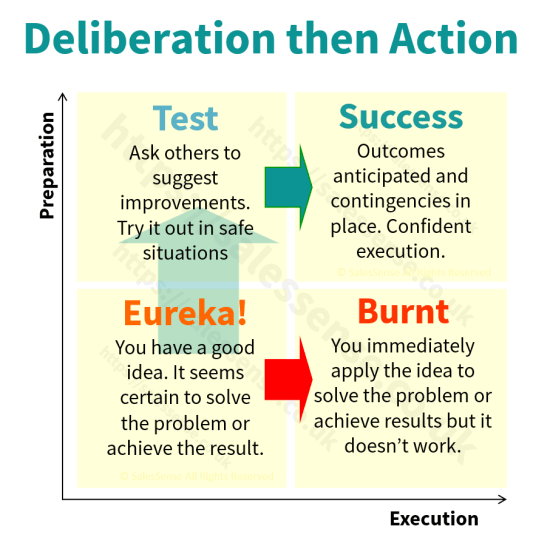
While the purpose of thinking about the past is to learn the lessons it teaches, the purpose of thinking about the future is to be better prepared for what happens.
Explore this collection of articles about planning and organisation to learn about predicting the future, enhancing preparation, and improving organisation.
Topical Articles
Browse the titles listed below or use the search box at the top of the right-hand column to find what you are looking for.
- Benchmark sales KPI to Increase Performance
- Business Development Management Skills
- Compare 12 Aspects of B2B Sales and Marketing Efficiency
- Develop Organisation and Planning Skills
- Early Warnings from Sales Benchmarks
- How to Win with a Sales Plan
- Manage a Sales Crisis and Carry on Selling in a Falling Market
- More Value in a Sales Enablement Kit
- Plans and the Remarkable Value of Planning
- Practical Actions to Quickly Fix a Sales Crisis
- Sales Plans that Banish Failure
Here is a practical guide on planning and organisation for sales performance:
Effective sales performance rarely happens by accident. Consistent results come from clear planning, disciplined organisation, and purposeful daily activity. This guide offers a framework you can apply immediately.
1. Start with Outcomes, Not Activity
Planning begins with clarity about what must be achieved.
Define:
- Revenue targets
- Pipeline value required
- Number of opportunities needed
- Conversion ratios
- Average deal size and sales cycle length
Work backwards from your target. If you need £1 million in sales and typically win one in four opportunities with an average value of £50,000, you know you need:
- 20 wins
- 80 qualified opportunities
- A pipeline of roughly £3–4 million
This approach ensures your plan is grounded in commercial reality rather than hopeful activity.
2. Build a Structured Sales Plan
A robust sales plan answers three questions: where will results come from, what must happen, and when will it happen?
Where will results come from?
Segment your market:
- Existing customers
- Lapsed customers
- Target accounts
- Inbound leads
- Channel or partner opportunities
Allocate revenue expectations to each segment.
What must happen?
Define:
- Number of meetings
- Proposals
- Account reviews
- Prospecting sessions
- Campaigns
When will it happen?
Map activity across:
- Year
- Quarter
- Month
- Week
Use a simple planning structure:
- Annual: targets and strategy
- Quarterly: campaigns and focus accounts
- Monthly: pipeline and activity targets
- Weekly: actions and priorities
3. Organise Your Pipeline Properly
Your pipeline is your early warning system.
Ensure:
- Opportunities are clearly defined
- Stages reflect real progress
- Probabilities are realistic
- Next actions are scheduled
Avoid:
- “Hope” opportunities
- Stalled deals
- Over-optimistic forecasts
Ask regularly:
- What moves this deal forward?
- Who must be involved?
- What is the customer trying to achieve?
A well-organised pipeline makes forecasting easier and highlights where action is needed.
4. Prioritise Ruthlessly
Not all opportunities are equal.
Focus on:
- High-value prospects
- Accounts with a clear need
- Customers aligned with your strengths
- Deals with access to decision-makers
Use simple prioritisation:
- A: Must win
- B: Should win
- C: Nice to win
Time spent on low-value opportunities is time taken from high-value ones.
5. Plan Your Week Before It Starts
The most effective salespeople plan weekly.
Weekly structure:
- Prospecting time
- Customer meetings
- Proposal preparation
- Account development
- Administration
Block time in your diary:
- Prospecting sessions
- Follow-ups
- Preparation
- Review
Protect these blocks as you would customer meetings.
6. Prepare for Every Conversation
Before any meeting or call, ask:
- What is the objective?
- What do I want to learn?
- What value will I bring?
- What is the likely next step?
Prepare questions, not just answers.
Preparation improves:
- Confidence
- Relevance
- Credibility
- Conversion rates
7. Maintain Personal Organisation
Organisation is not just about CRM systems. It is about habits.
Daily disciplines:
- Clear inboxes
- Update CRM
- Record actions
- Set reminders
- Prepare tomorrow today
End each day by asking:
- What moved forward today?
- What must happen tomorrow?
8. Review and Adjust Regularly
Planning is not a one-off exercise.
Review:
- Pipeline value
- Conversion rates
- Activity levels
- Win/loss outcomes
Adjust:
- Focus accounts
- Messaging
- Activity levels
- Targeting
Regular review keeps plans realistic and relevant.
9. Common Pitfalls to Avoid
- Confusing activity with progress
- Overestimating pipeline quality
- Failing to prioritise
- Poor preparation
- Lack of follow-up
- No review rhythm
Sales performance declines when the organisation slips.
10. A Simple Sales Planning Checklist
Monthly
- Review targets and pipeline
- Identify gaps
- Plan campaigns
Weekly
- Set priorities
- Schedule prospecting
- Prepare key meetings
Daily
- Update CRM
- Follow up
- Prepare
- Review progress
Final Thought
Planning and organisation are not administrative burdens. They are performance tools. The most successful salespeople know what they must achieve, know where results will come from, focus on the right opportunities, prepare thoroughly, and review regularly. Sales success is rarely about working harder. It is about working in a planned, organised, and purposeful way.
Visit our blogs for more:
Issues and news for those who sell technology, software, or know-how-based business solutions:

Our founder's blog free wheels to encompass a wider set of ideas and issues:
Follow this link for other article topics or search this site for answers. Don't miss our regular content updates, sales articles, new ideas, and solutions. Subscribe for sales news.
We often publish guest articles about sales planning and organisation. To suggest articles for inclusion, We will be pleased to review any articles put forward. Alternatively, email custserv@salessense.co.uk, use the contact form here, or call +44 (0)1392 851500.