Retain key customers, strengthen relationships, and increase business through key account management training.

Protect high-value repeat business from strategic customers. Take this Key Account Management training course to elevate standing, increase loyalty, and maximise major account sales.
For in-house and one-to-one delivery, the course is tailored to embrace real customers and opportunities. Training takes place in a virtual setting or a traditional classroom.
Arrange key account management training to:
- Grow key accounts
- Establish high level sponsors
- Improve key account planning
- Mitigate risk of loss
- Co-ordinate efforts
- Create strategic partners
- Improve forecast accuracy
- Keep competitors out
Who should attend?
Experienced key account managers (also referred to as global account managers, strategic account managers, and major account managers) and people in their support teams. Others who regularly participate in key account sales including line managers, bid team members, marketing, and technical staff. This course is suitable for large account management training and global account management training.
What are the Key Account Management Course learning objectives?
- Extend understanding of the customer's business.
- Establish trusted advisor status with customer executives.
- Understand customer politics and organisational dynamics.
- Learn to predict organisational change.
- Expand relationships across divisional and departmental boundaries.
- Improve team communication and reduce or eliminate mistakes.
- Establish or develop strategic partner status.
- Increase certainty and forecast accuracy.
- Maximise share of mind, sales revenue, and profit.
- Anticipate and counter the efforts of competitors.
- Reduce sales cycle times.
Key Account Management training helps account managers maximise sales opportunities and protect the business from competitors.
Throughout the course, participants apply principles and methods to real account situations and develop a unique account plan that guides the ongoing use of learning in the workplace.
Learn new ways to maximise customer value, expand share of mind, keep competitors out, and gather invaluable feedback. Establish personal status as a trusted advisor and organisation status as that of a strategic partner in important customer accounts.
What is in the course?
Introduction: Goals, objectives, and learning management.
Essential Knowledge: Understanding the customer's business.
Executive Perspective: Inside the minds of leaders and policymakers.
Relationship Status: Mapping relationships and relationship objectives.
Trusted Advisor: How to know if you are one and become one if you are not.
Strategic Partner Status: How to know if you have it and get it if you haven't.
Organisational Politics: What it is and why you must take it into account.
Using the Tools: Mapping power and relationships in a real customer.
Internal Referrals: Crossing departmental and functional boundaries.
Establishing Periodic Meetings: Operational reviews and strategic enquiries.
Competitive Strategy: How to anticipate and defeat the plans of competitors.
Using the Tools: Learning to select and test competitive strategy.
Quantified Qualification: Will it happen, can you win, will it be worthwhile?
The Black Hole: How to ensure continued communication after submitting a proposal.
Efficient Account Plans: Assembling and maintaining account plans.
Review and Next Steps: How to transform learning into results
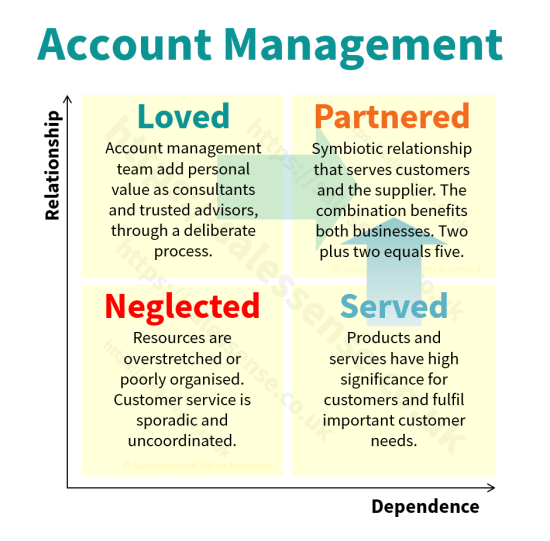
Key account management best practices:
Effective key account management depends on a small number of consistent disciplines:
- Understanding the customer’s business, pressures, and strategic goals
- Building relationships at multiple levels, including executive sponsors
- Creating and maintaining practical account plans
- Co-ordinating sales, service, technical, and management efforts
- Identifying growth opportunities across divisions and functions
- Reviewing risk, competition, and stakeholder change regularly
- Positioning your organisation as a strategic partner
These are the kinds of practices that help protect important customer relationships, increase share of account, and reduce the risk of unexpected loss.
Participant Interview
Please introduce yourself.
I'm a regional sales specialist. I work in the aerospace and defence industry. I've been in this role in similar sales roles
for probably eight or nine years.
How did you come to take the course?
I'd recently taken on several key accounts that were not just large accounts, but were also group accounts with multiple companies all functioning in different geographical regions, but part of a wider group. I looked for a course about managing large complex accounts that function across multiple regions and found you.
What were your learning insights?
I think the key things were realising what you don't know and how much more there is to know. Realising how your time management has to change, and your approach to accounts has to change. Especially accounts where you're dealing a lot more directly with C suite level. The interpersonal and intercompany politics side of things was really useful, as well as the competitive strategy part. Seeing the competitive strategies laid out in a really clear way that was easy to grasp and easy to identify means that going forward, I'll definitely be thinking more strategically. Also, key account management plans and how to better qualify and prioritise opportunities. And splitting the operational needs and the strategic needs of accounts. How to make sure that I'm not being pulled too much into the operational side and that I'm regularly having strategic discussions and thinking more long-term about accounts.
What have you been able to apply?
In the accounts that I manage that are relevant for this program, I've developed a lot more touch points within the companies. I'm talking to different divisions and more people within the divisions. I've started developing long-term plans and bringing customers on the journey with us. We are talking about shared goals and shared opportunities.
What advice would you have for anyone else considering the course?
Definitely make time to go through the presentations and do the exercises before the sessions. Having that time to think of my own answers in advance made what we discussed in the sessions more valuable. Lots of insights and actions came up as we discussed the slides.

What makes this the best key account management training course?
- Delivered by the course author.
- Based on real customers and opportunities.
- Guided by established best practices.
- Access to the course content in advance of training.
- Spending session time working on real plans and practising execution.
- Training that facilitates the creation of a consistent process.
- The creation of workplace actions for embedding learning in routines and habits.
- The opportunity for one-to-one learning.
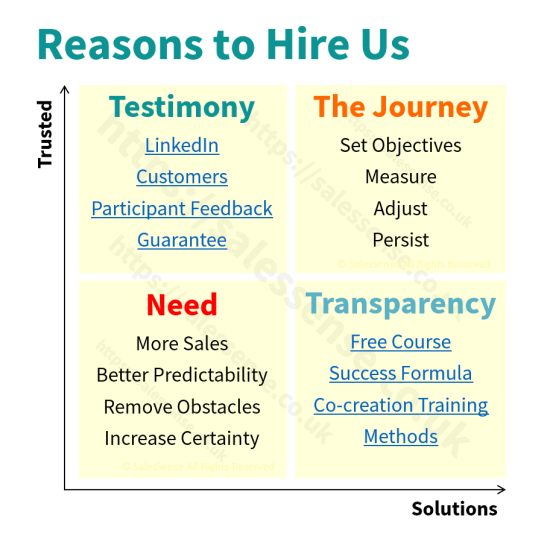
- Guaranteed results.
About the Course Author
Clive Miller is a UK-based sales consultant, trainer, and coach with over 30 years’ experience helping B2B organisations improve sales performance and decision-making effectiveness.
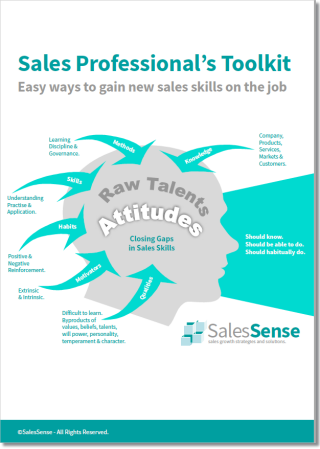
Clive's work focuses on sales thinking, consultative selling conversations, opportunity strategy, sales leadership and management. He has written more than twenty sales and management training courses, and two books, the Sales Professionals Toolkit and The Power to Speak in Public. SalesSense programmes are known for combining clear thinking with practical application.
More about Clive Miller
Schedule an informal conversation or call +44 1392 851500.
Additional Benefits
- Flexible multi-session 'learning by doing' training options.
- Workplace assignments that develop new habits and practices.
- Tools, templates, frameworks, and examples that save time and aid learning.
- Adopting a common language improves communication and teamwork.
- Training increases the adoption of best practices, habits and methods.
- Training increases sales productivity, consistency, and results.
- Professional development improves job satisfaction and motivation.
- Increasing know-how and expertise reduces staff turnover.
Key Account Management Course Pricing and Delivery Options
- One-to-one delivery through eight 2-hour or sixteen 1-hour sessions.
- £1595 - Learn more.
- One-to-one on a per-session basis.
- £150 - Learn more.
- Group training via eight 2-hour or sixteen 1-hour virtual classroom sessions.
- £6320 for up to fifteen people. Learn more.
- Group training on a per-session basis to address selected content.
- £450 per 1-hour session for up to fifteen people. Learn more.
- Fees exclude applicable VAT.
- Traditional Classroom - The programme delivery takes place over one or more days at a conference venue or at the customer's offices. Contact us for fees.
Use this link for more information or to have us call you.
FAQ: Key Account Management Training
What is key account management training?
Key account management training helps account managers, salespeople, and client-facing teams manage strategically important customers more effectively. It focuses on protecting valuable business relationships, building stronger stakeholder engagement, improving account planning, identifying growth opportunities, and reducing the risk of losing major accounts. Unlike general sales training, key account management training is usually concerned with long-term customer development rather than one-off transactions.
Who should attend a key account management course?
A key account management course is most suitable for people responsible for major customers, strategic accounts, or high-value repeat business. That may include key account managers, account directors, senior account managers, business development managers with responsibility for existing major clients, and sales managers who lead account teams. It is especially useful where a small number of customers represent a large share of revenue or future growth.
Is this course suitable for strategic account managers and global account managers?
Yes. The principles of key account management training are highly relevant to both strategic account managers and global account managers. Where accounts are commercially important, politically complex, or spread across divisions, regions, or countries, account managers need a more structured and strategic approach. Training can therefore be adapted to reflect the demands of strategic, national, or global account responsibility.
What is the difference between key account management and account management?
Account management usually focuses on maintaining and developing existing customer relationships. Key account management is more strategic and is used where certain customers are especially important because of their value, growth potential, influence, or risk. Key account managers typically need stronger skills in account planning, stakeholder mapping, executive relationships, cross-functional coordination, and long-term account development.
Can the training be tailored to our sector and major accounts?
Yes. Key account management training is usually most effective when it reflects the organisation’s real customers, markets, and commercial challenges. The course can be tailored to suit different sectors, levels of account complexity, and the specific issues faced by your team, such as growing share of account, strengthening customer loyalty, building account plans, or improving senior-level access within major accounts.
Is the course available virtually or in-house?
Yes. The training can be delivered virtually or in-house, depending on your team’s needs, location, and preferred format. Some organisations prefer in-house workshops so the content can be tailored around live accounts and current business priorities. Others choose virtual delivery for convenience, flexibility, or geographically dispersed teams.
What outcomes should we expect from key account management training?
Well-designed key account management training should help account managers become more strategic, more commercially aware, and more effective at developing important customer relationships. Typical outcomes include stronger account plans, better stakeholder coverage, improved customer retention, clearer growth strategies, increased confidence in handling major accounts, and more consistent management of high-value customer opportunities.
What are the best practices for key account management?
Best practices for key account management include understanding the customer’s business, building multi-level relationships, maintaining strong account plans, creating value beyond day-to-day service, coordinating internal teams, reviewing progress regularly, and acting early to reduce competitive risk. These are all areas typically covered in effective key account management training.
Related Account Management Resources
Account Management: Turn customers into business partners. A training course for new and inexperienced account managers.
Accelerate Sales through Partners: Suitable for channel account managers and those responsible for selling via third parties including agents, resellers, distributors, and alliances.
Account Management for Customer Retention: Article by Clive Miller on the subject of customer retention.
B2B Sales Training Courses: Explains the benefits, options, and pricing for our range of B2B sales training courses.
Large Account Management Training: An alternative version of this page for visitors searching for large account management training. It describes the same course with emphasis on major customer development and protection.
Large Numbers
Licensing and train-the-trainer options enable the self-delivery of our key account management training course. To find out more, call or use the links below. Associate and Affiliate representation is welcomed. To promote or deliver this course, get in touch directly.
Want something different?
Please ask:
If you are looking for a key account management training course or need to protect major account business, get in touch. Telephone +44 (0)1392 851500. Alternatively, use the contact form here or email custserv@salessense.co.uk.